Photography, Illustrations and Editorial by: Dr. Christopher Cooper
The Queen Anne Revival style debuted in North America at the 1876 Centennial Exposition in Philadelphia, where the British government showcased several prominent examples. Interestingly, the style bears little resemblance to the architecture from the actual reign of Queen Anne (1702–1714).
By roughly 1880, the style emerged in Canada and the United States as a highly decorative movement characterized by diverse building materials. Wood-frame versions were frequently painted in five or six contrasting hues to accentuate intricate textures and trim. This palette typically leaned toward dark “earth tones”—such as sienna red, hunter green, burnt yellow, and muddy brown—ensuring that nearly every interior and exterior surface featured some form of ornamentation.
The expansion of the Transcontinental Railway was pivotal to this architectural era. For the first time, elaborate doors, windows, roofing, and siding were mass-produced in factories and shipped affordably across the continent, allowing builders to create the residential masterpieces we recognize today.
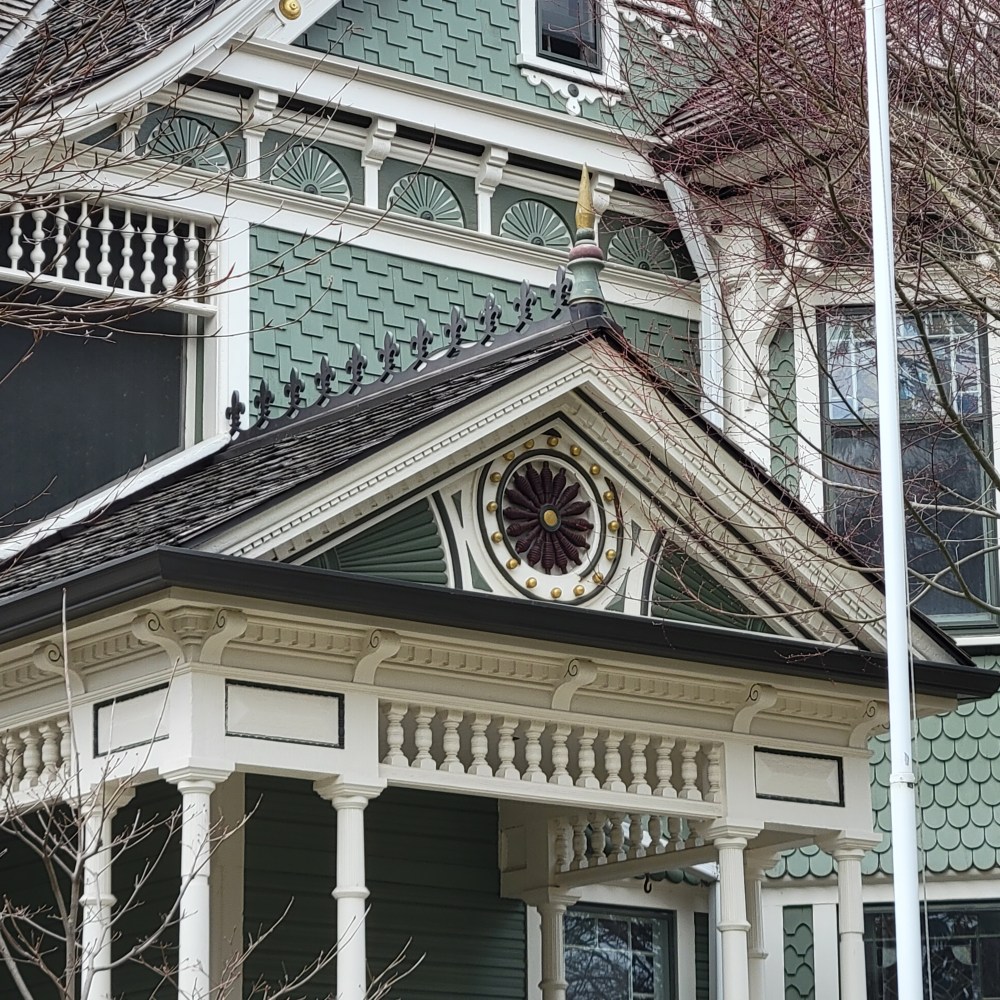
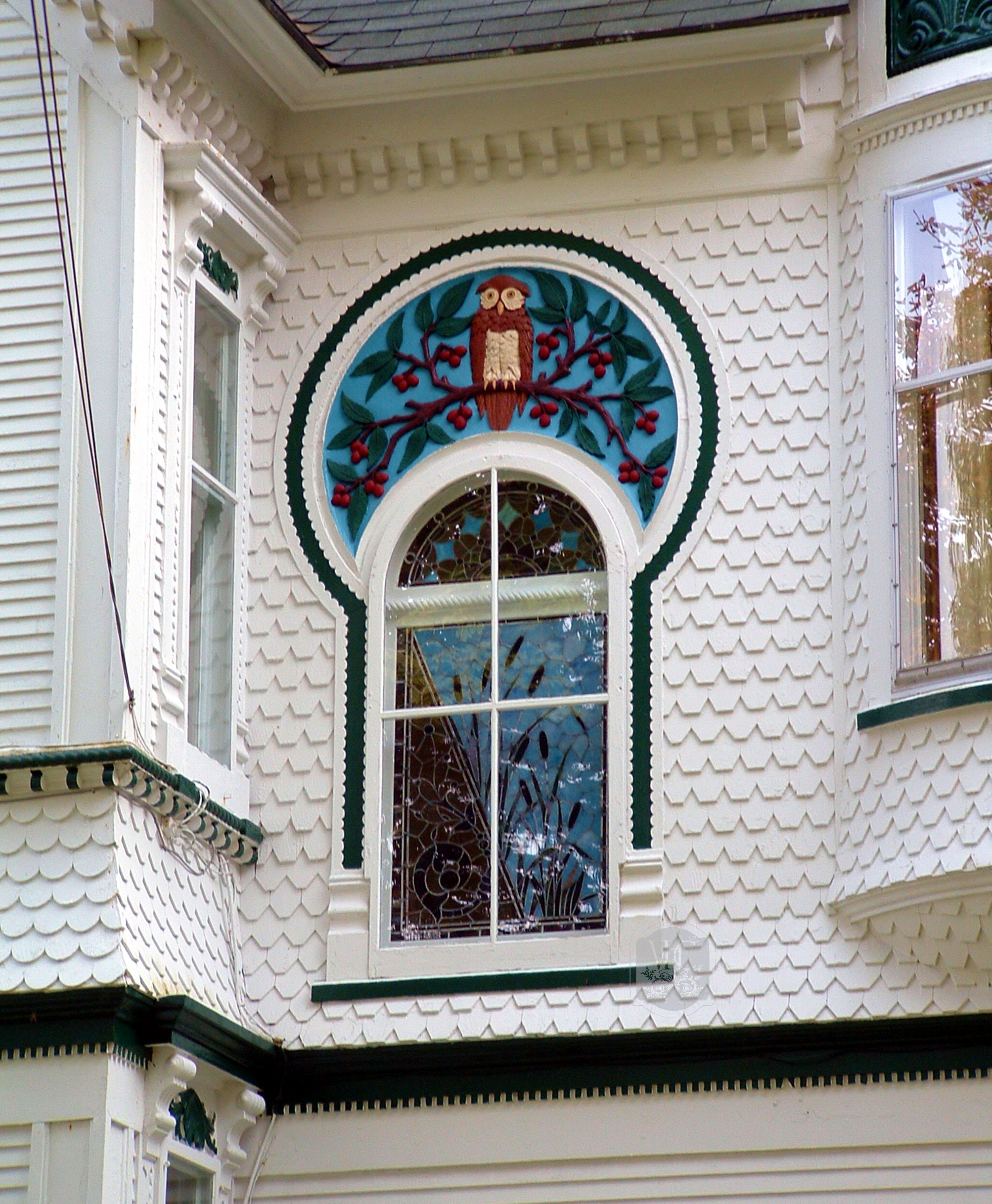
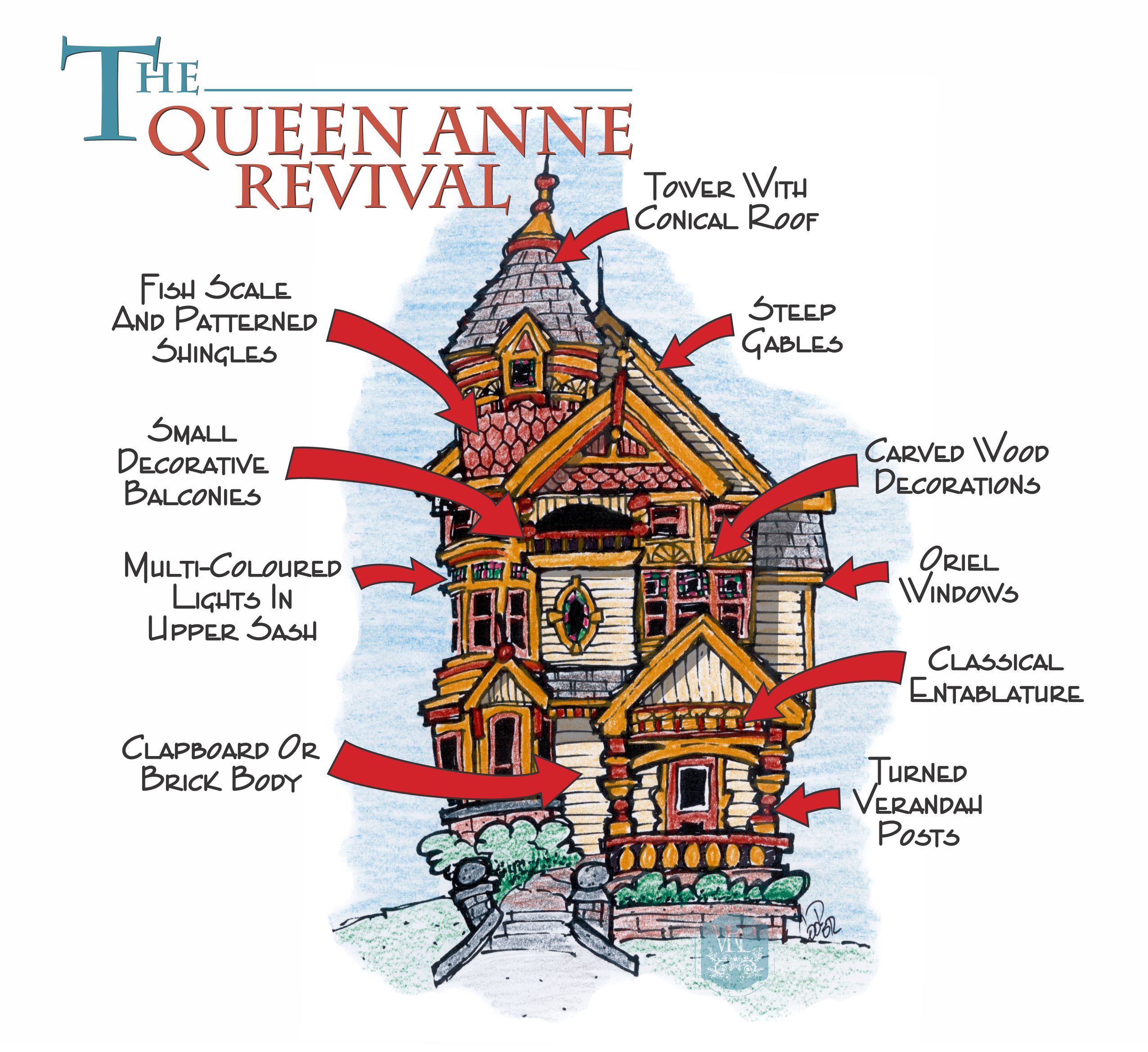
Queen Anne Revival architecture is defined by its striking asymmetry and eclectic charm. These homes feature a diverse array of windows—ranging from one-over-one double-hung sashes and bays to stained glass and round arches—including the signature “Queen Anne” window, where a large central pane is framed by smaller, often coloured, lights. Their steeply pitched, hipped roofs are punctuated by lower cross gables and adorned with decorative “fish scale” wood or slate shingles. This play of texture continues across the facades, where ground-floor brick often transitions into upper-level shingles or horizontal siding. Topped with elaborate, decorative chimneys, this style achieved unprecedented popularity across Canada, spread by pattern books that served as the “home plan magazines” of their day.
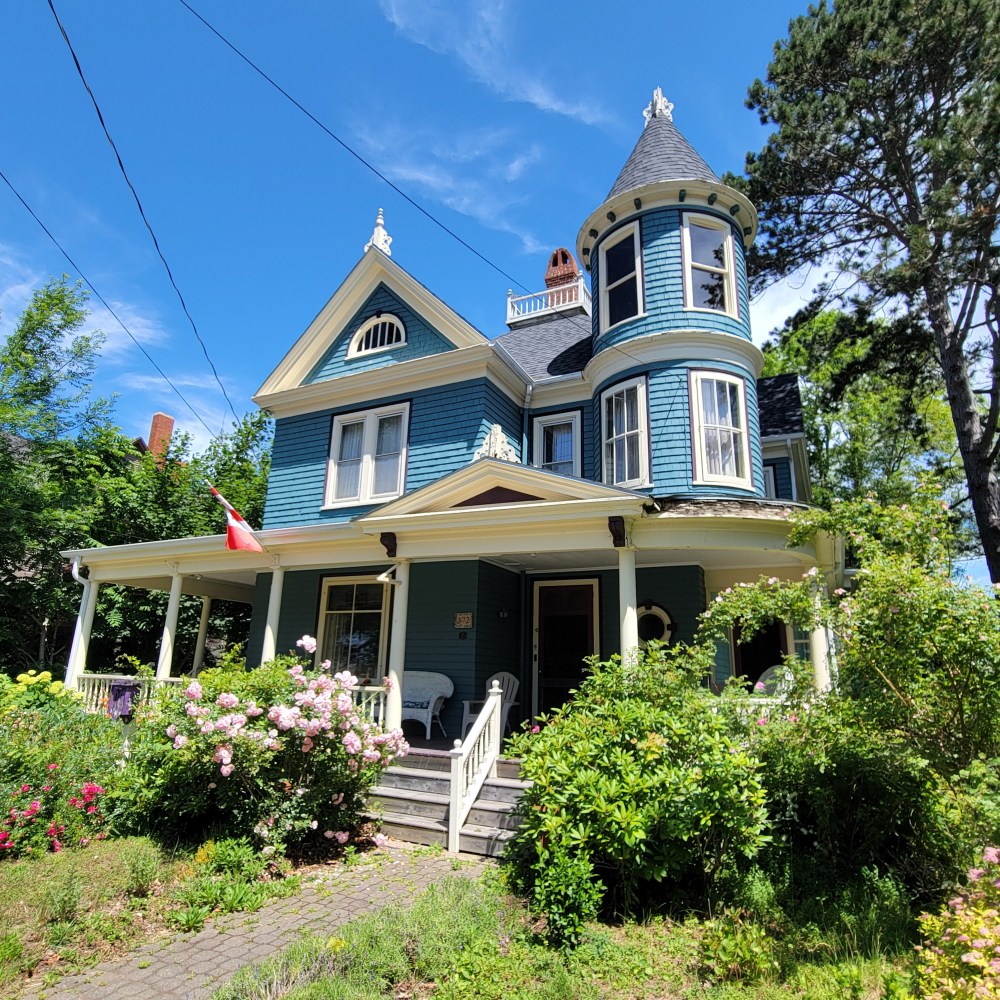
Often referred to as “Gingerbread” houses or “Painted Ladies,” Queen Anne Revival architecture represents the pinnacle of High Victorian design. These “Stepdaughters of the Gilded Age” were lofty, fanciful expressions of the Machine Age—vibrant monuments to 19th-century prosperity.
Ironically, the same intricate details that made these homes so regal also made them fragile; their expansive, expressive frames were both difficult and costly to preserve. By the turn of the 20th century, the style’s exuberant ornamentation fell out of fashion, and most were muted under layers of conservative white paint. Today, however, these monochromatic Queens are being rediscovered and restored to their former glory as the true Painted Ladies of the Gilded Age.
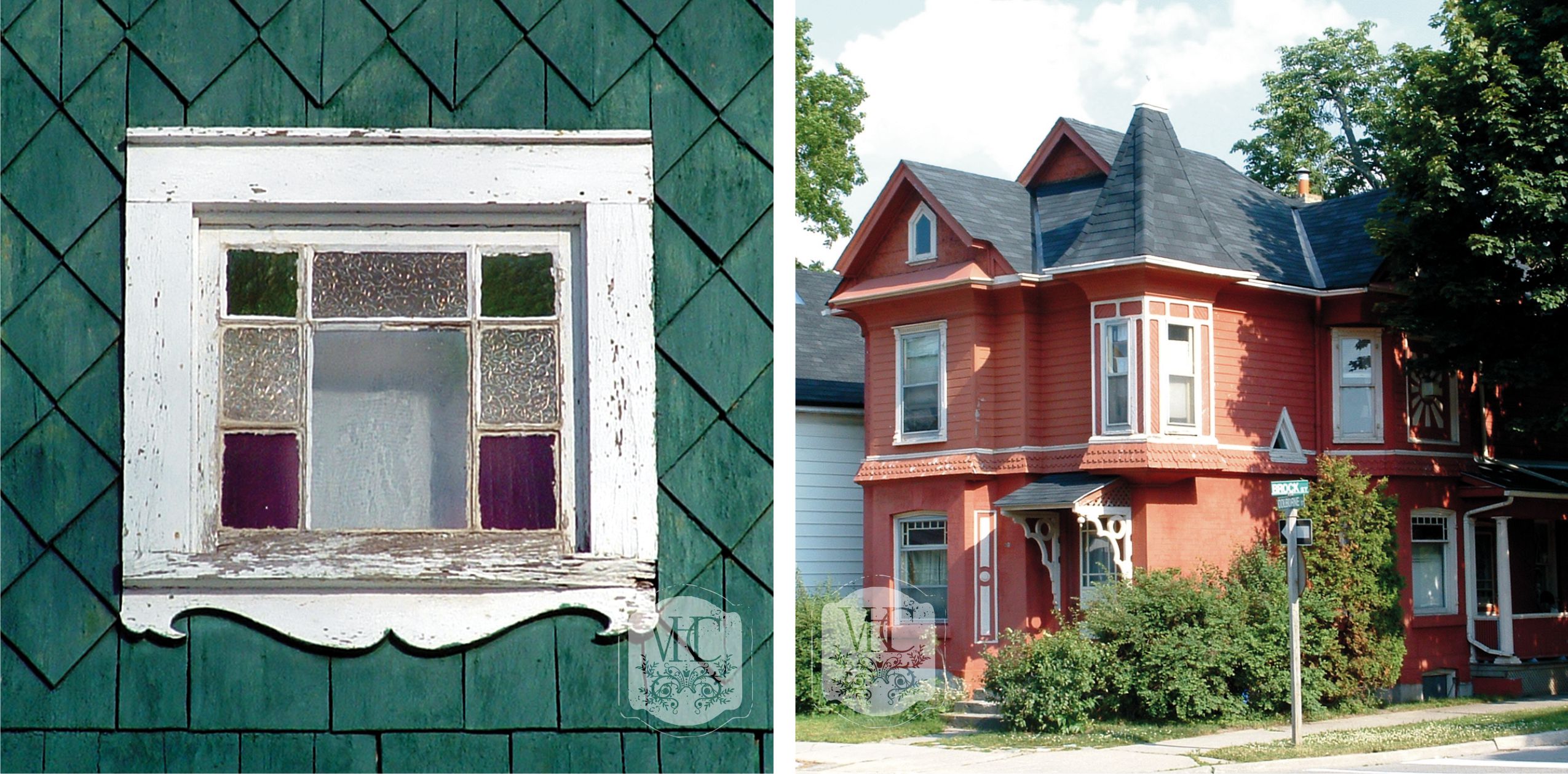
Learn how to repair and restore these beautiful pieces of Architectural Folk Art as a Homeowner or as a Professional Heritage Consultant — Only at the Edifice Atelier!
Find out more at: eguild.ca